How to Choose the Right Industrial Uniforms for Your Team
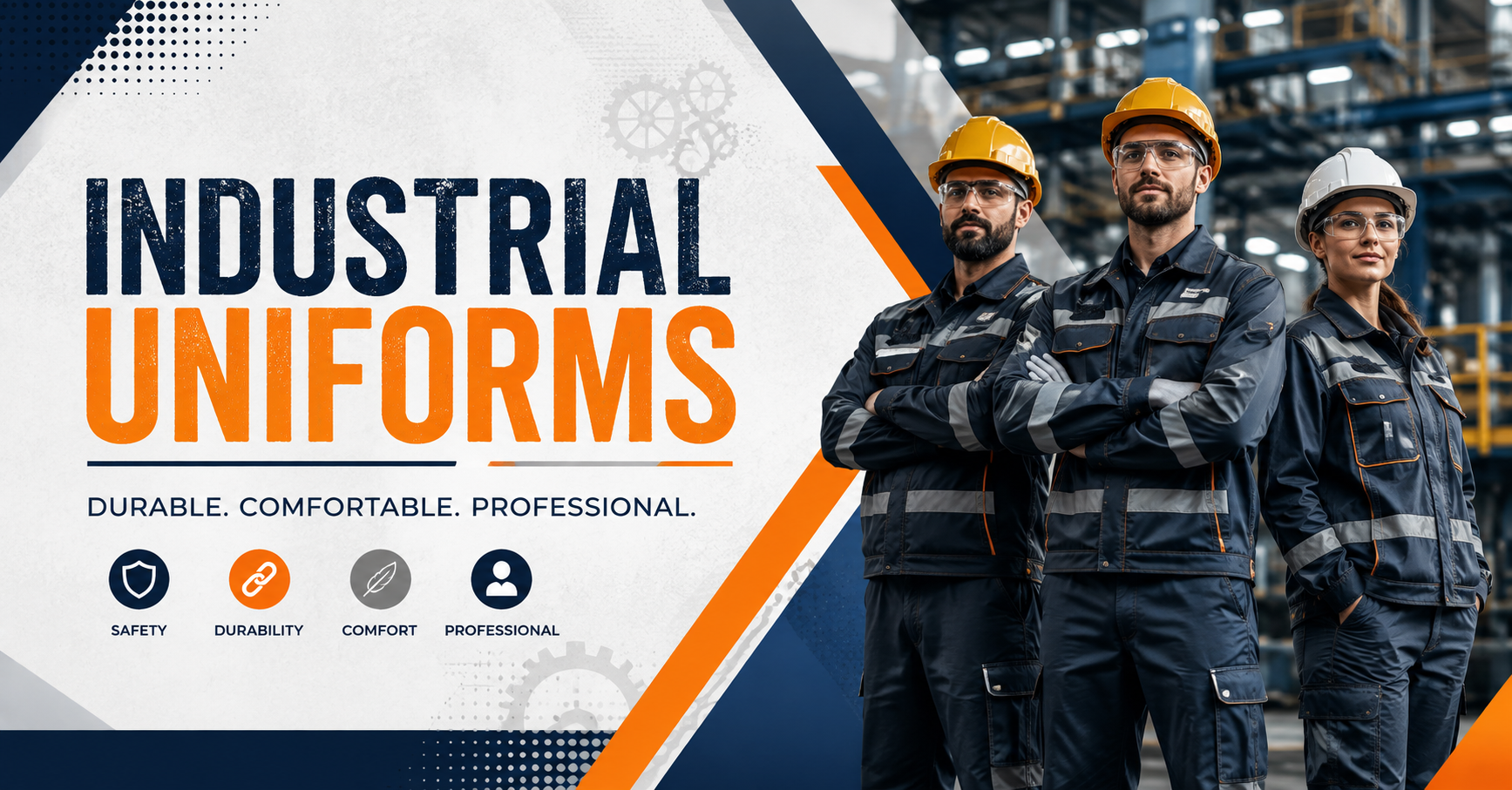
Choosing workwear is about more than picking a shirt, trousers, or coverall that looks professional. The right uniform can improve comfort, safety, teamwork, and the overall image of your business. However, every workplace has different needs. Before placing a large order, it is important to understand the job, work environment, and employees who will wear the clothing.In this guide, we explain how to choose industrial uniforms that balance safety, comfort, durability, and cost. You will also learn what to check before buying and which common mistakes to avoid.
What Are Industrial Uniforms?
Industrial uniforms are work clothes designed for employees in demanding workplaces such as factories, warehouses, construction sites, workshops, logistics companies, and manufacturing plants.Unlike everyday clothing, these uniforms are made with work conditions in mind. Depending on the job, they may include work shirts, cargo trousers, coveralls, jackets, safety vests, and protective clothing.Before choosing a uniform, businesses should assess the risks and tasks involved. For workplaces where protective equipment is required, the uniform should work well with other PPE. For example, OSHA advises employers to assess workplace hazards and select PPE that provides suitable protection and fits employees properly.industrial uniforms
5 Steps to Choose the Right Industrial Uniforms for Your Team
1. Start With the Work Environment
Firstly, look closely at where your employees work.Is the workplace hot, cold, dusty, wet, or exposed to chemicals? Do employees spend most of their time indoors or outdoors? Do they move around often or perform tasks that require bending and lifting?These questions help you select the right fabric and design.For hot environments, lightweight and breathable materials can help workers stay comfortable. For colder areas, layered uniforms or insulated jackets may be better. If employees work around dirt or grease, choose fabrics that are easy to clean and maintain.The goal is simple: choose clothing that suits the actual workplace instead of relying only on appearance.
2. Match the Uniform to Job Safety Needs
Safety should always come before style.Different jobs can create different risks. Workers may face heat, sparks, sharp materials, dust, chemicals, machinery, or poor visibility. Therefore, uniform requirements should be based on a proper workplace assessment.For example, high-visibility clothing may be useful where workers need to remain visible around vehicles or machinery. Protective coveralls may be suitable for certain industrial tasks.However, a standard work uniform is not automatically the same as certified PPE. When protective clothing is required, check the relevant safety standard and product certification before buying.OSHA states that required PPE should be safely designed, properly maintained, and suitable for the hazards involved.
3. Focus on Comfort and Fit
A uniform can be durable and still fail if employees find it uncomfortable.Workers may wear the same clothing for eight or more hours each day. A poor fit can restrict movement, create discomfort, and reduce employee acceptance.Choose uniforms with:
- Comfortable sizing
- Easy movement around the shoulders and arms
- Suitable sleeve lengths
- Practical pockets
- Breathable fabric where needed
- Strong but comfortable waistbands
- Enough room for required PPE
Additionally, order samples before making a large purchase. Ask a few employees to wear them during normal tasks. Their feedback can reveal problems that are easy to miss during a simple visual inspection.
4. Check Fabric Quality and Durability
Industrial work can be hard on clothing. Frequent washing, dust, oil, movement, and outdoor exposure can quickly damage low-quality garments.That is why durability matters.Look for strong stitching, reliable zippers, reinforced stress points, and fabrics suitable for repeated washing. The best material depends on the workplace. Cotton can offer comfort and breathability, while blended fabrics may provide a useful balance between comfort, strength, and easy care.For protective clothing, also check the applicable standards. ISO 13688 covers general requirements for protective clothing, including ergonomics, sizing, ageing, compatibility, and marking. It is intended to be used alongside standards covering specific protective performance.
5. Consider Branding and Practical Design
Once safety, comfort, and durability are covered, consider your company's professional image.A clean and consistent uniform can help employees look organized and make staff easier for customers and visitors to identify.You can add your company logo through embroidery, printing, or other suitable branding methods. Choose logo placement carefully so it does not interfere with pockets, safety features, or protective equipment.Also, think about practical details. Employees may need pockets for tools, ID cards, pens, phones, or small equipment. A useful uniform should support the job instead of making it harder.
Common Mistakes to Avoid
Even well-planned uniform orders can go wrong. Here are three common mistakes and simple ways to prevent them.Choosing based only on price:
Cheap uniforms may cost more over time if they wear out quickly. Compare quality, expected lifespan, maintenance, and replacement costs.Ignoring employee feedback:
Management may like a uniform that workers dislike wearing. Test samples with employees before placing a bulk order.Confusing uniforms with PPE:
A normal work shirt is not automatically protective equipment. If the job requires certified PPE, select products that meet the applicable safety requirements. OSHA also requires training when employees must use certain PPE.
Where to Find Reliable Information
Before buying industrial uniforms, businesses can use several reliable resources:
- OSHA: Useful for workplace safety and PPE requirements.
- ISO: Helpful for understanding international standards related to protective clothing.
- Industry safety bodies: Trade and safety organizations can provide sector-specific guidance.
- Uniform manufacturers: Experienced suppliers can explain fabric, sizing, customization, and care options.
- Employee feedback: Your own team is one of the best sources for practical information.
Additionally, review safety requirements whenever your workplace, equipment, processes, or job duties change. PPE selection may need to be updated when workplace conditions change.
Why the Right Uniform Is a Smart Business Investment
Good industrial uniforms are not simply an employee expense. They can support a safer, more organized, and more professional workplace.Durable clothing can reduce frequent replacement. Comfortable designs can make long workdays easier. Consistent branding can strengthen company identity. Most importantly, the right protective clothing can support workplace safety when selected according to the hazards involved.The key is to avoid a one-size-fits-all approach. Different teams may need different fabrics, designs, and protective features.
Conclusion
Choosing the right industrial uniforms starts with understanding your workplace and employees. Consider safety requirements, comfort, fabric quality, fit, durability, and branding before making a purchase. Always test samples and check relevant standards when protective clothing is involved.Ready to upgrade your team's workwear? Compare your workplace needs, prepare a clear uniform checklist, and speak with a reliable uniform supplier to find practical options for your team.
FAQs About Industrial Uniforms
1. What should I consider when buying industrial uniforms?
Start with workplace hazards, employee comfort, fabric quality, fit, durability, maintenance, and budget. If protective clothing is required, also check the applicable safety standards.
2. What fabric is best for industrial workwear?
There is no single best fabric for every workplace. Cotton can provide comfort and breathability, while blended fabrics may offer strength and easier care. Choose based on the work environment and safety requirements.
3. How many uniforms should each employee receive?
The right number depends on the job, washing schedule, and replacement policy. Many businesses provide multiple sets so employees have clean workwear available while other uniforms are being washed.
4. Can industrial uniforms include company branding?
Yes. Logos can usually be added through embroidery or printing. However, branding should not interfere with safety features, reflective areas, pockets, or required protective equipment.
5. Are industrial uniforms the same as PPE?
Not always. A standard work uniform mainly provides comfort, identification, and practical coverage. PPE is specifically selected to protect workers from identified hazards and may need to meet particular standards. OSHA provides guidance on hazard assessment, PPE selection, fit, maintenance, and training.
